Performance budgets (web speed limits)
Performance budgets is a methodology for keeping web page speed at the level we set. Think of a “budget” as a limit on values for various metrics.
Tools that monitor speed limits alert us to potential problems when thresholds are breached. This helps teams track and maintain the chosen speed level even as new content is added or features change.
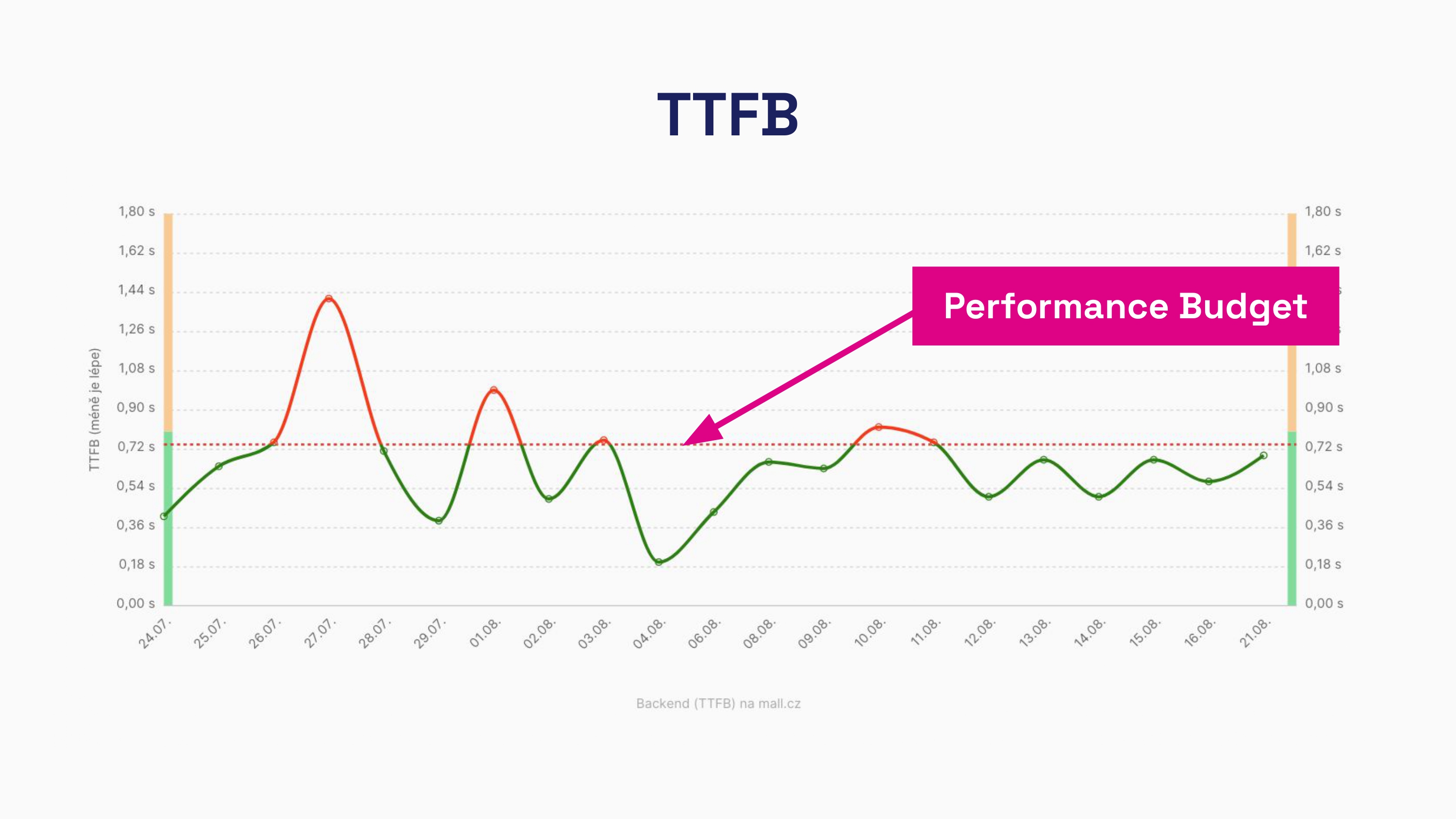 Performance budget for the TTFB metric
How do speed limits help optimize performance?
Performance budgets are a set of rules that ensure pages stay fast and user-friendly. The limits work well with various measurements — both synthetic and RUM.
It’s wise to monitor speed limits for all key metrics. Specifically, we recommend tracking metrics from the Core Web Vitals set and then additional supporting metrics. The list of metrics to monitor should look like:
- Time to First Byte (TTFB)
- First Contentful Paint (FCP)
- Largest Contentful Paint (LCP)
- Cumulative Layout Shift (CLS)
- Interaction to Next Paint (INP)
- Total Blocking Time (TBT)
Note, there are notable differences between synthetic and RUM measurements.
Synthetic measurements are limited to metrics during page load, which means results for metrics like INP or CLS may be unavailable or inaccurate here. Therefore, treat synthetic CLS results as partial relative to user data (CrUX), and in synthetic measurements for INP, monitor TBT.
Why should everyone monitor Performance Budgets?
Page load speed directly affects user experience and, in turn, business performance. A slow site can reduce conversions and increase bounce rate.
Performance budgets help achieve this:
- Maintain consistent metric levels. By setting limits you prevent issues when deploying new features or content.
- Automate checks. With automatic alerts, you don’t have to monitor manually all the time.
- Test over the long term in a stable environment. By keeping the same test environment you can compare current state and history.
For deeper understanding of performance budgets, check out MDN’s article, the SpeedCurve blog, or Harry Roberts.
Monitoring PLUS handles web speed limits differently
In our Monitoring PLUS, within performance budgets we automatically set the current metric levels, unlike traditional approaches.
You can find speed limits in the Watchdog report. Watchdog monitors your site’s speed daily. If a key metric changes, Watchdog will alert you.
Unlike other tools, Watchdog runs in the background without constant attention or spam. You can focus on what matters for your projects.
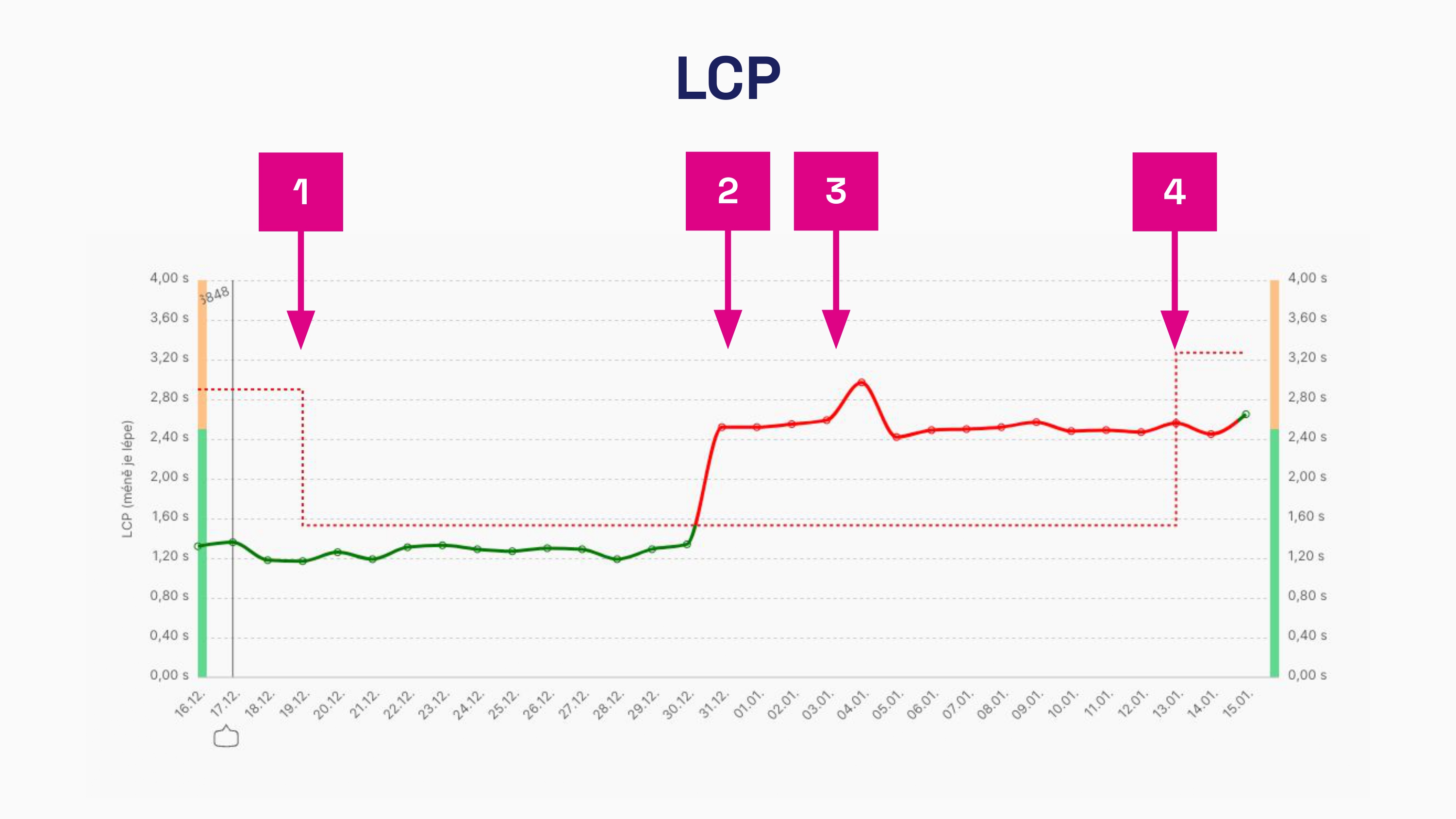 How the Speed Watchdog works in Monitoring PLUS.
Here’s what you see in the image:
- The LCP metric improved, triggering an automatic recalibration to lower thresholds.
- There is a sharp deterioration in the metric.
- If it isn’t a temporary change, Watchdog will send a notification.
- Even after two weeks with no fix, Watchdog adopts the new level for monitoring the LCP metric.
Bottom line? Web speed tends to degrade. Performance Budgets help maintain the current level and track changes. The essential capability of Monitoring PLUS is to keep an eye on these limits and alert you to potential issues.