Core Web Vitals
Core Web Vitals (CWV) is Google's essential set of metrics designed to reflect website loading speed and user experience. Let's explore which metrics it includes, why they matter, and how to measure them.
What do they measure?
Core Web Vitals are a set of three specific metrics: Largest Contentful Paint (LCP), Interaction to Next Paint (INP), and Cumulative Layout Shift (CLS).
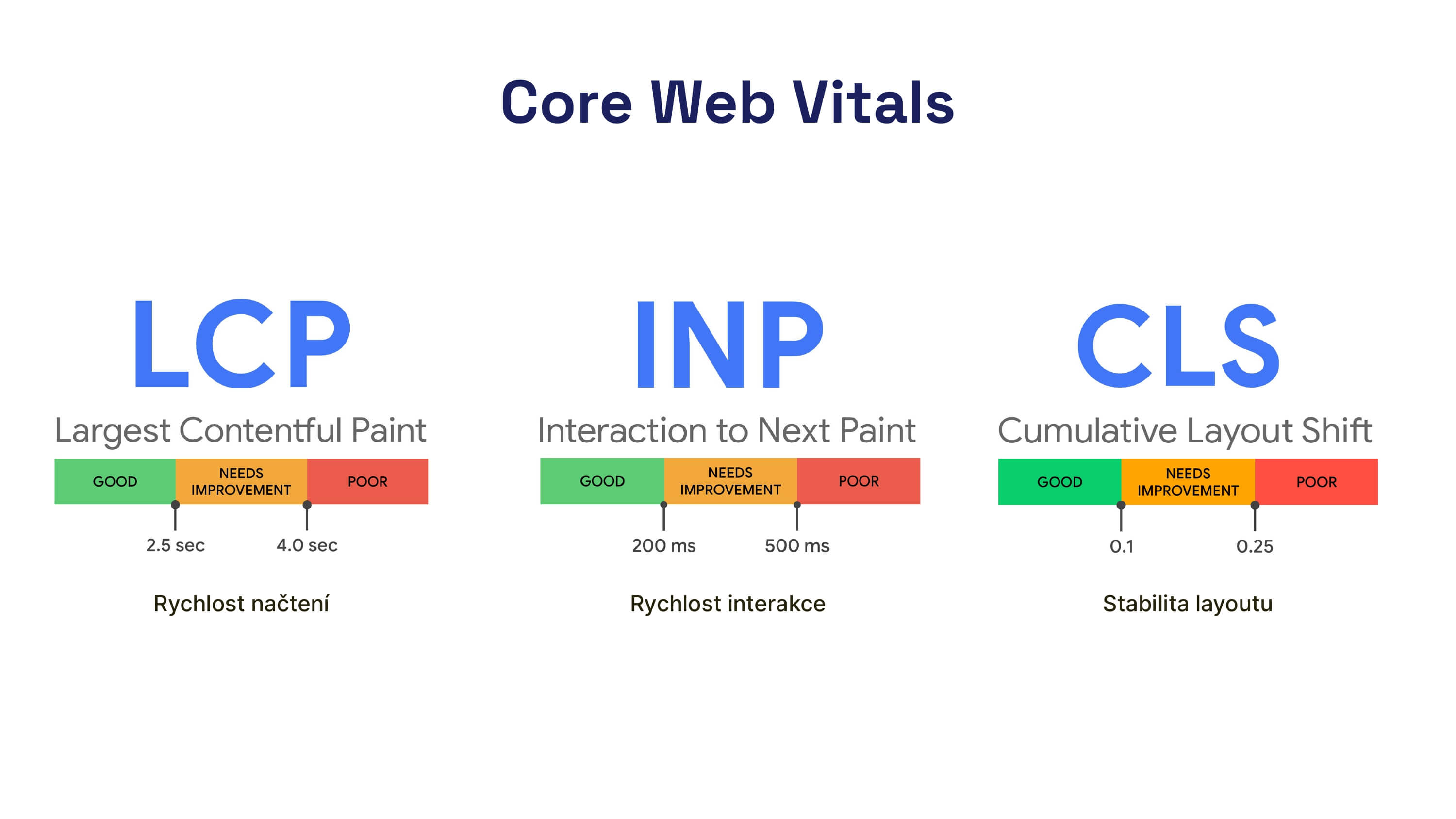
- Largest Contentful Paint (LCP) measures the time it takes for the largest visible element on the page to load. It answers the question “How fast does it load?” The target is 2.5 seconds.
- Interaction to Next Paint (INP) measures the time from an interaction to the rendering of the next frame, for all interactions on the page. It answers the question “How fast does it respond?” A good response time to the next render is 200 ms.
- Cumulative Layout Shift (CLS) examines the visual stability of the page during loading and while browsing. It answers the question “How much does the page jump?” Google considers CLS acceptable below 0.1.
How to obtain metric values?
Core Web Vitals represent data collected from real users via Google Chrome in the Chrome UX Report (CrUX). You can find this data in the PageSpeed.cz tester, PageSpeed Insights, or for URL sets in Google Search Console.
Why these metrics matter
Pages that meet these metrics typically deliver a better user experience, which can lead to higher conversions, better search rankings, and cheaper PPC ads.
Google didn’t pick the metrics and thresholds randomly; they’re based on extensive research and analysis of many studies in human–computer interaction. For this reason, CWV serve as key benchmarks for optimizing web speed.
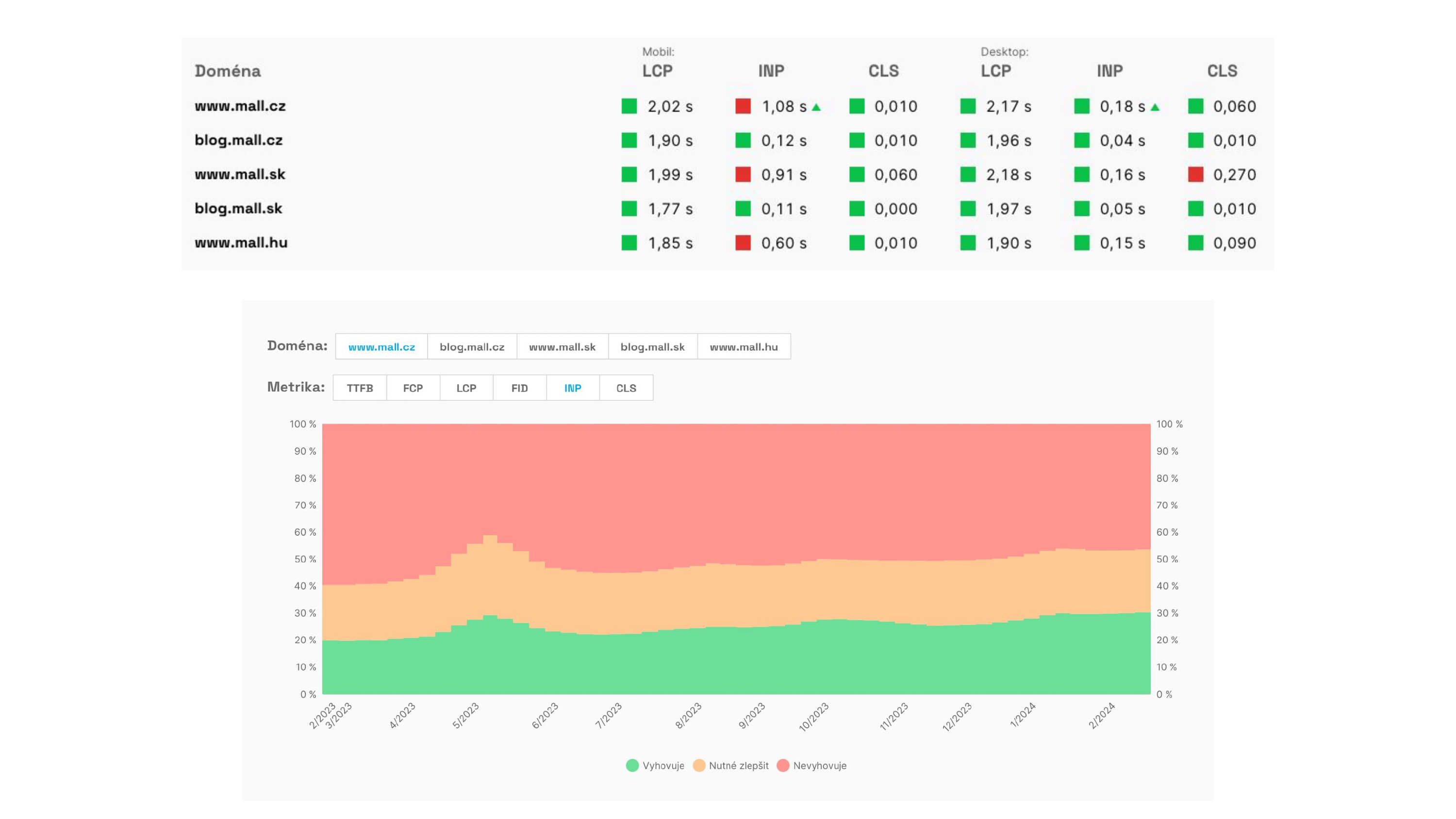
Core Web Vitals dashboard in the PageSpeed.cz tester
A summary of CWV metrics for mobile and desktop can be found in the PageSpeed.cz tester, on your team’s dashboard. Also in the “Summary” report and more. Our tool also lets you track metric trends by domain or URL over time.
Tagy:MetrikyCore Web VitalsCrUX
PředchozíKumulativní posun layoutu (CLS)DalšíFirst Contentful Paint (FCP)