Why Optimize Website Speed?
Website speed matters. Not just because Google says so.
The human brain perceives instant interface responses at around a few hundred milliseconds. Most sites today can’t hit that during loading, but every improvement counts.
Speeding up your site will likely boost conversions, as numerous case studies show. That’s why Google supports fast sites, and speed can also help with traffic and even with advertising costs.
 Google supports fast sites because speed affects conversions. And because the human mind isn’t endlessly patient.
First, let’s get to the heart of the matter—the psychology of human patience when interacting with a user interface.
Psychology
In 1968, when R. B. Miller ran the first tests to understand how users of mainframe terminals perceived response times, he probably didn’t suspect his study would become one of the most cited in the field more than fifty years later.
Among other findings, his work introduced the idea that the magic threshold—when we perceive a response as instantaneous—lies around 100 milliseconds.

Mr. Miller would likely be surprised to learn that, even in 2020, we still can’t load and render websites fast enough to keep users from waiting nervously. As users, we all know we’re far from that threshold in practice.
Tip: How to convince your boss or client of the importance of web speed? Here’s a concise PDF with the key arguments.
Technology has leapt from mainframe terminals to modern smartphones, but psychology hasn’t.
Yet the way our minds are wired implies that a faster UI will better achieve its goals.
Impact on Conversions
The link between site speed and conversion rate comes from Miller’s findings and other research, as well as practical case studies that have proliferated over the past decade.
All studies show that faster performance positively affects business outcomes or the owner’s goals.
Bounce Rate
“Bounce rate” is one of the most closely watched analytics metrics. From charts and numbers, it’s believed that speeding up the initial render will also improve bounce rate.
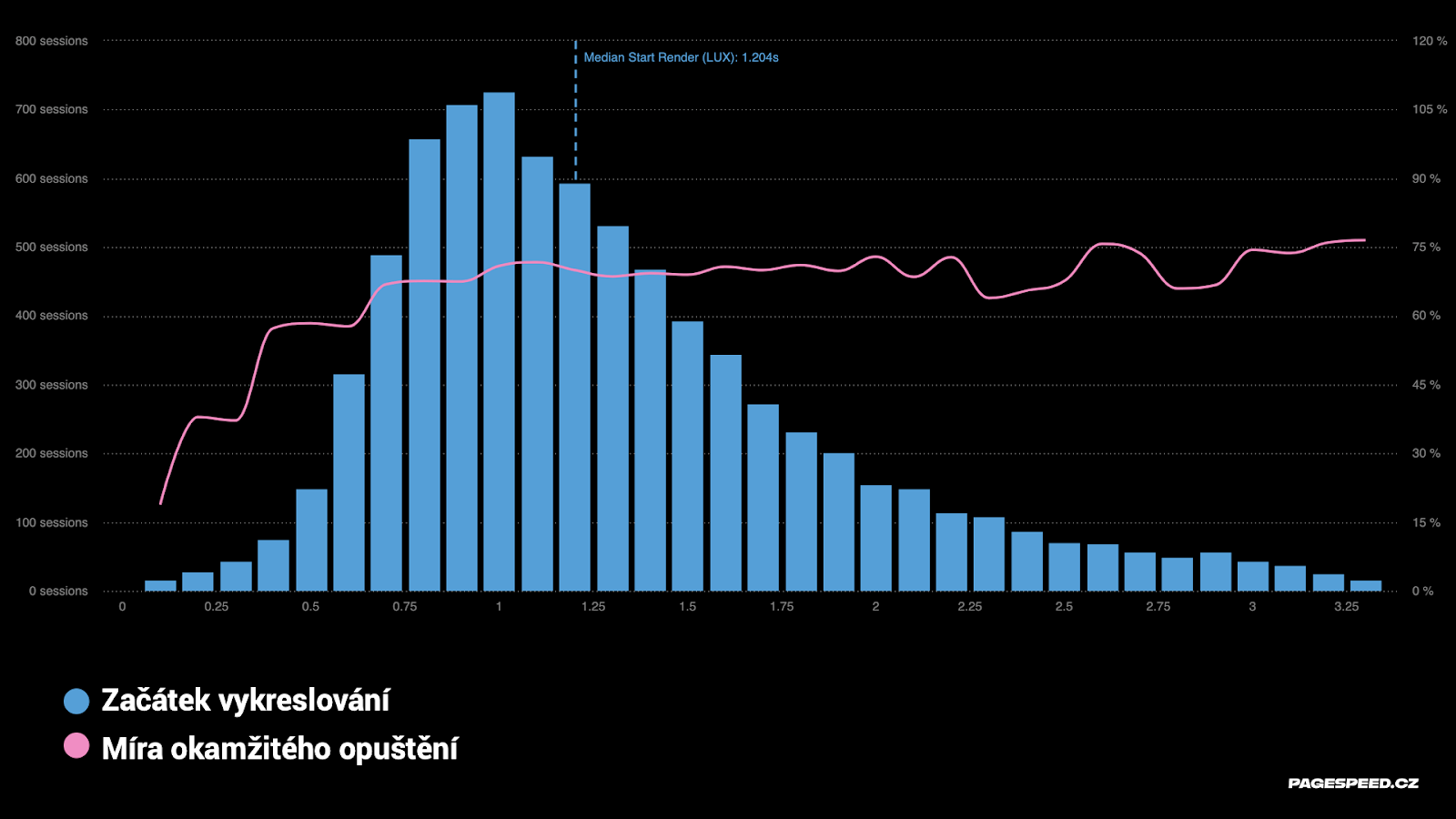 Correlation of speed and bounce rate on the Up & Down site (Source: SpeedCurve)
Examples illustrating speed’s impact on bounce rate:
Pageviews
In some industries, especially those driven by advertising, the number of pageviews often determines business success or failure.
“At BBC, we noticed that for every second a page loads slowly, 10% of users leave. If a site slows down due to loading, some features automatically shut down to speed things up.”
— Matthew Clark, lead technical architect at BBC
Which case studies show speed’s impact on pageviews?
- When Shopzilla reduced page load time by five seconds, they achieved a 12% higher conversion rate and 25% more pageviews.
- Financial Times added a one-second delay per page view and saw a 4.9% drop in page views; a three-second delay led to a 7.2% drop. (Source)
Conversion Rate
As speed improves, conversion rate typically follows. If you run an online store, this matters. For our clients, isolating the impact of speed from other factors is challenging, but we’ve had clear successes.
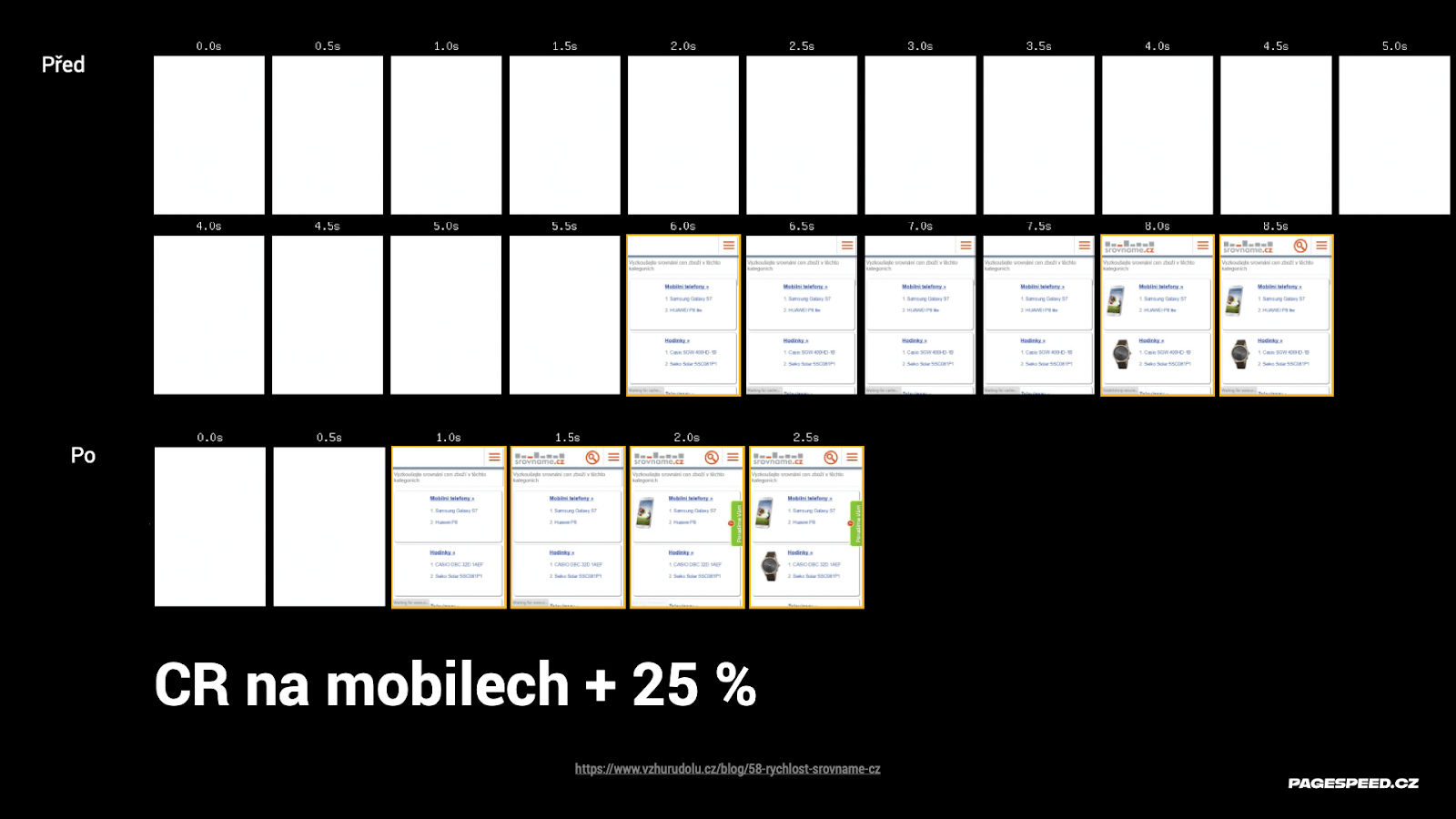 For Czech shopping comparison site Srovname.cz, speeding up the site helped increase mobile conversion rate by 25% - Source
There are plenty more case studies, nicely collected at wpostats.com.
As the numbers show, speed influences a wide range of important metrics. That’s why Google emphasizes this measurable factor in user experience.
Google’s Case
We sometimes hear:
— “Why are you planning to tackle speed at all?”
— “Google tells us to.”
This might suggest the entire speed discipline rests on a few internal Google meetings. In reality, Google’s experts and researchers back their guidance with data. A recent example is The Science Behind Web Vitals, which shows the data behind the metrics.
Google simply relies on data, and the data increasingly link good user experience with speed of loading and interaction.
Web Vitals and the Page Experience Signal
In a recent post, Evaluating page experience for a better web, Google announced work on a new Page Experience signal where speed will play a significant role.
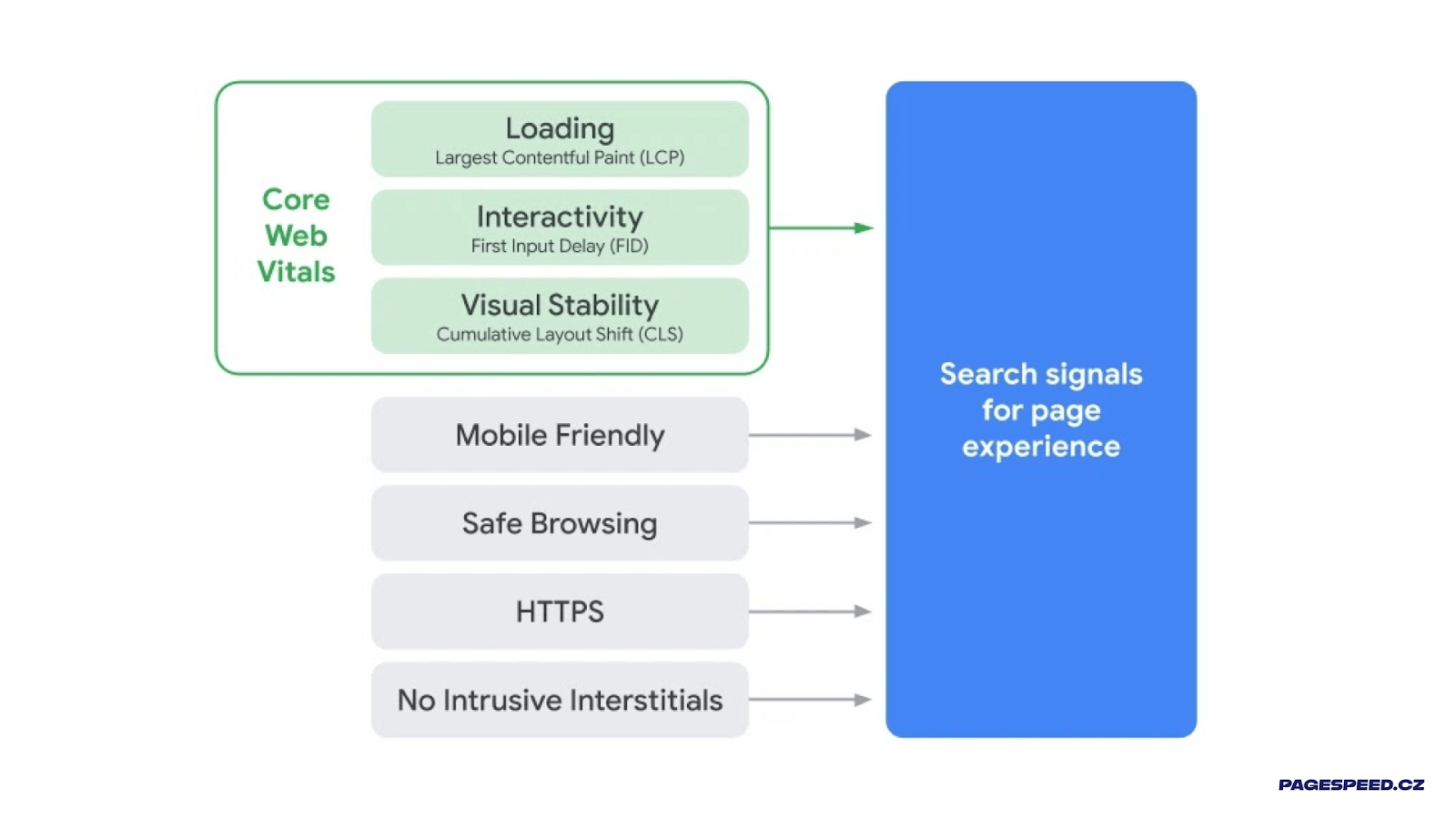 Google’s Page Experience signal focuses on safety, UX, and speed.
This isn’t the first time Google has signaled that speed matters. It is, however, the first time they’ve stated how they will measure it. The signal focuses on Web Vitals metrics, gathered directly from Chrome users and stored in the Chrome UX Report.
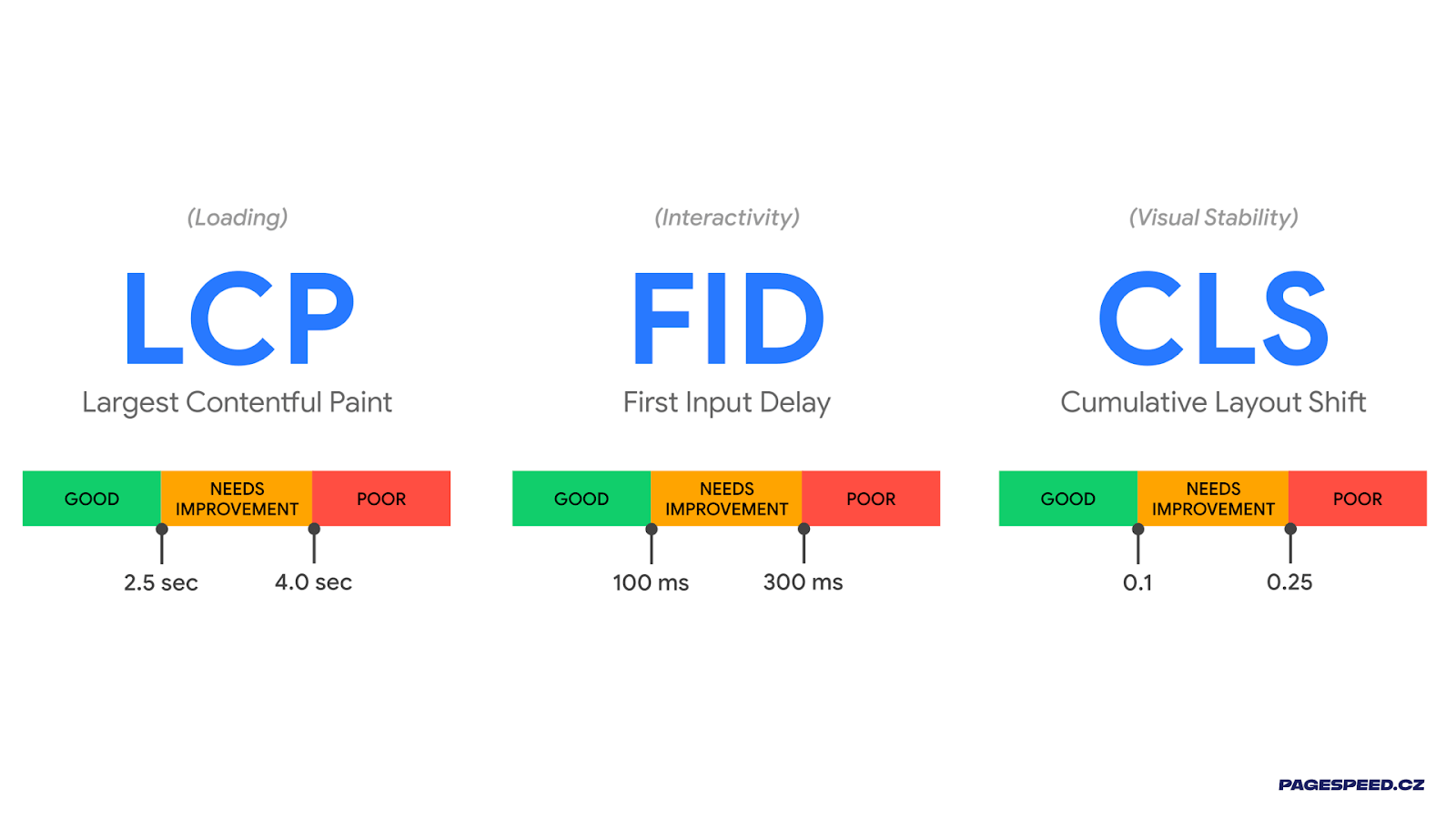 The most important speed metrics for every site — Core Web Vitals.
Google planned to roll out the new signal during 2021, so it’s wise to prepare.
We also have a handy PDF guide on Web Vitals.
We’ve already focused on Web Vitals with our clients. Let’s review the metrics and some of our successful optimizations.
LCP (Largest Contentful Paint, the rendering of the largest content):
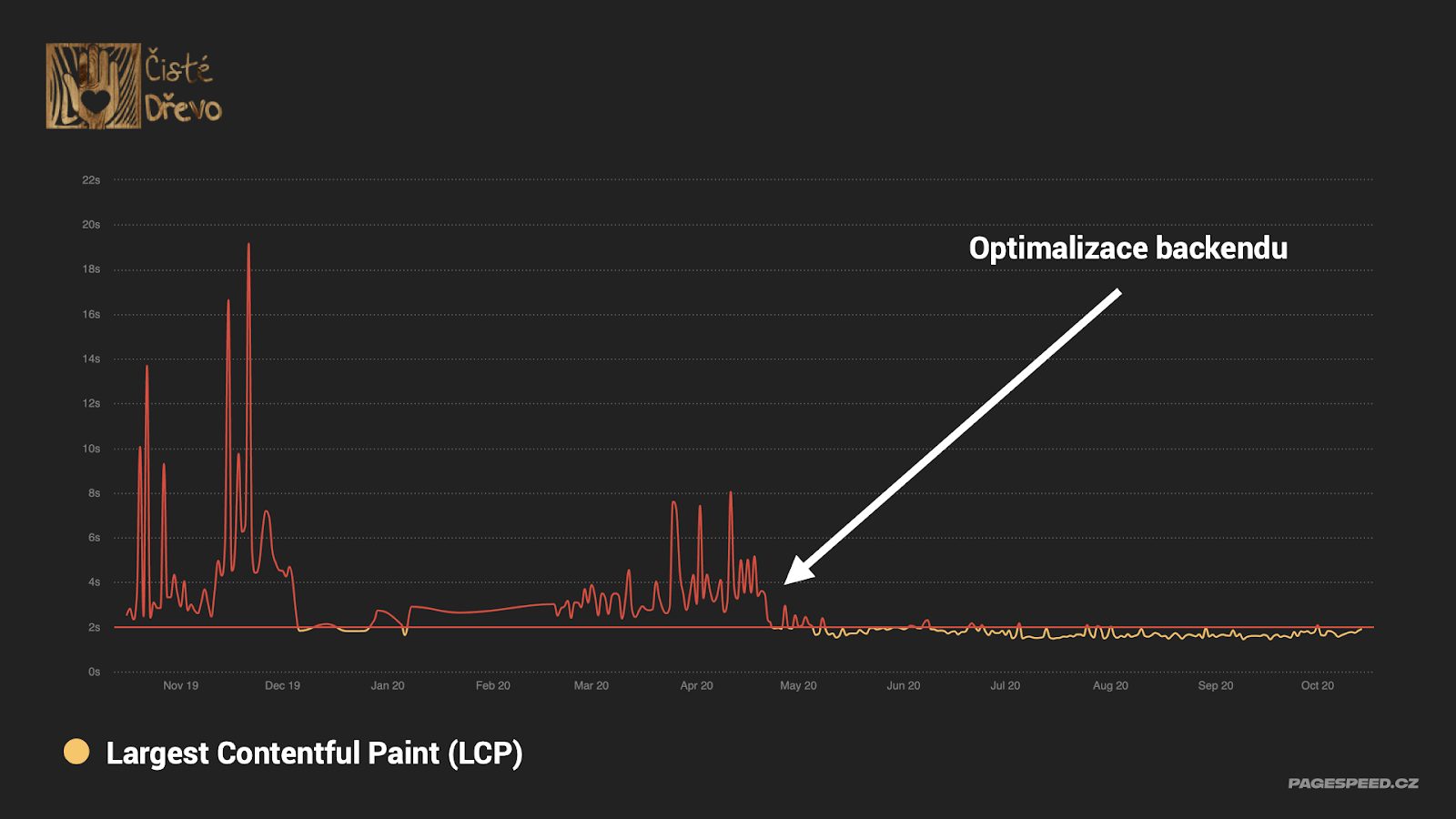 We helped the e-commerce site ČistéDřevo.cz identify backend issues. After fixes, LCP improved nicely.
INP (Interaction to Next Paint):
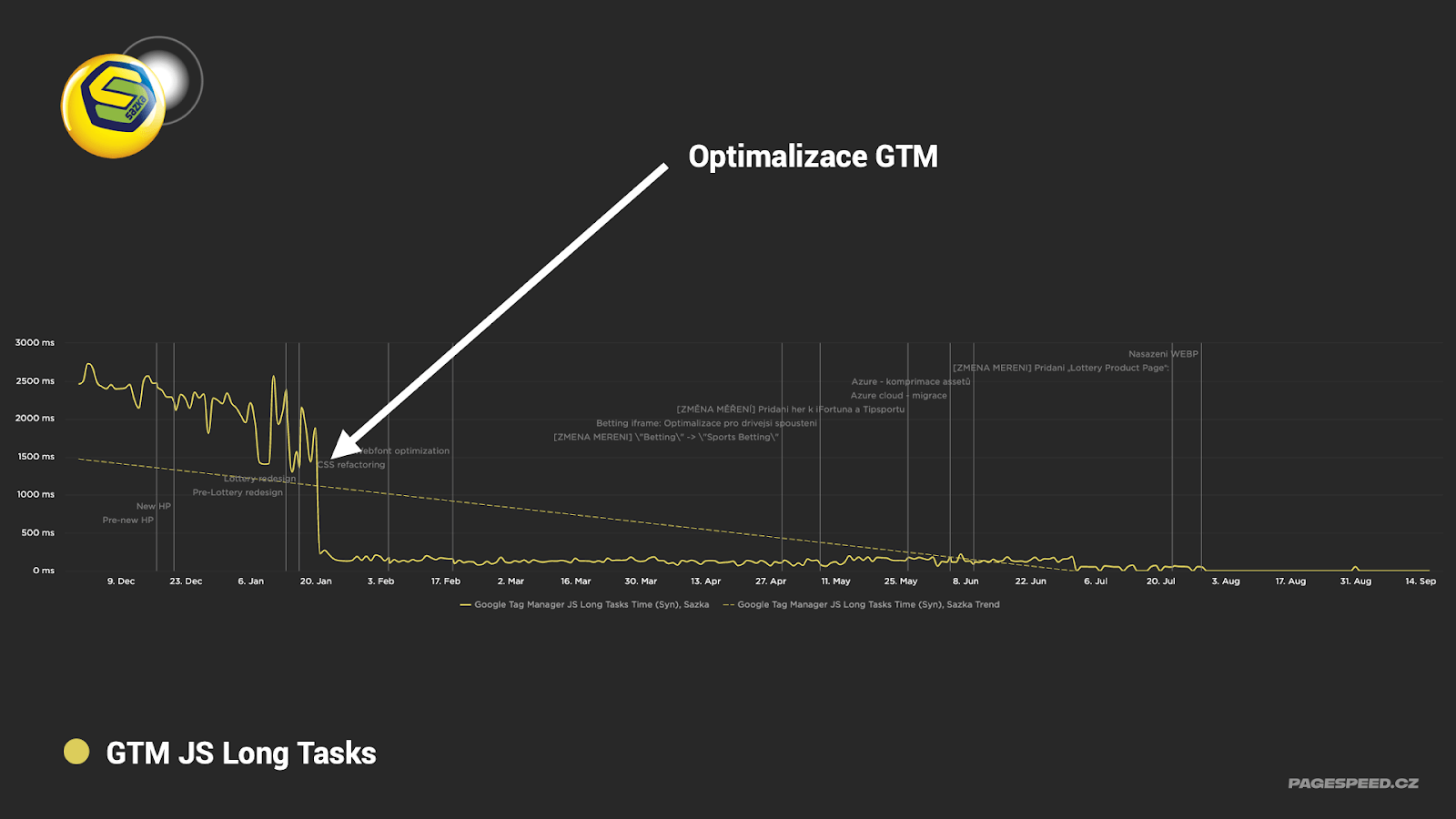 We helped Sázce identify JavaScript performance issues tied to GTM code, which negatively affected INP.
CLS (Cumulative Layout Shift):
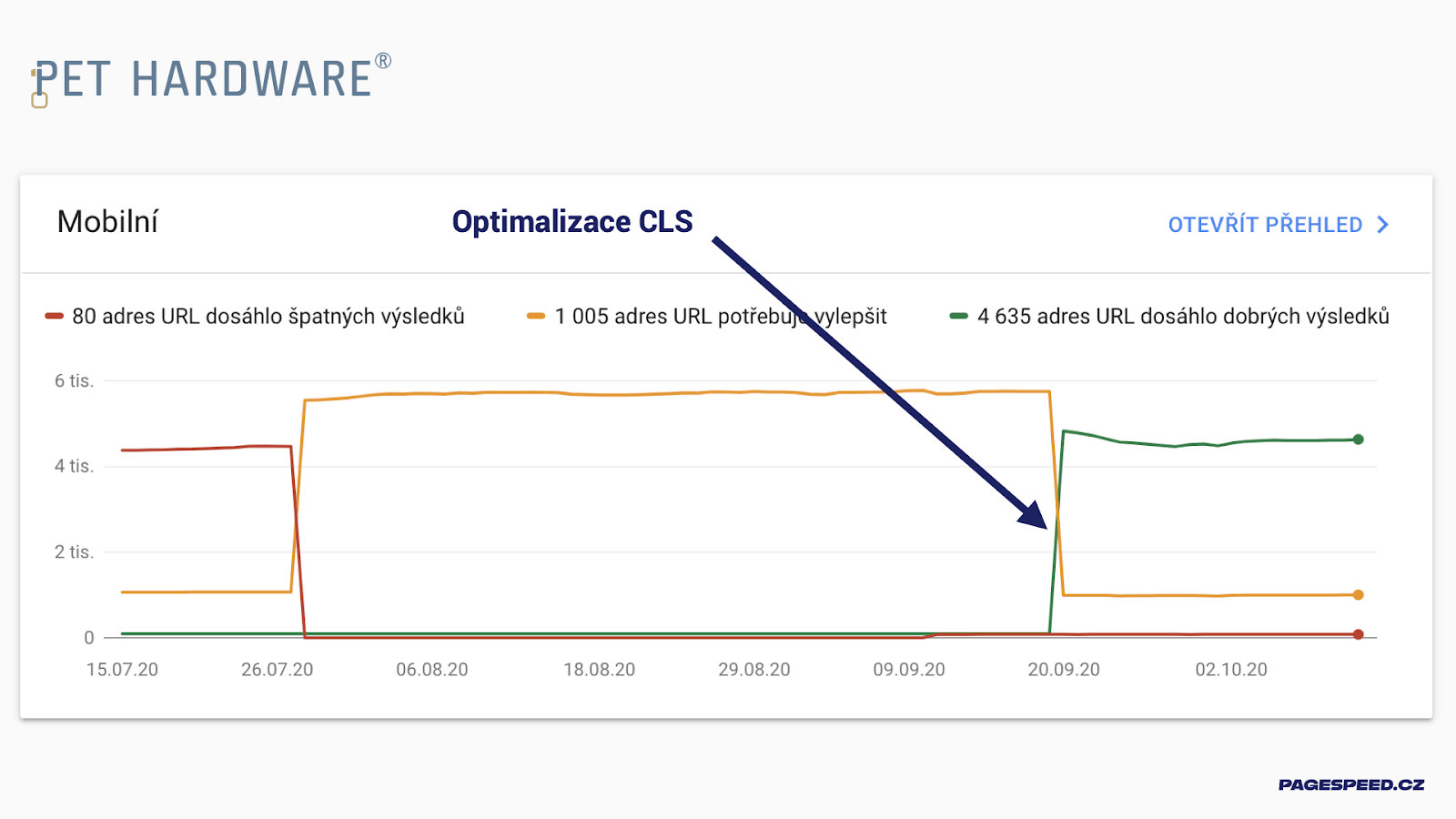 In collaboration with Pet Hardware, Michal Matuška identified and removed unwanted layout shifts during rendering.
Google Ads and Mobile Speed Score
If you run Google ads, you’re likely familiar with the [Mobile Speed Score], which Google uses to rate landing pages for your campaigns.
Speed score affects the cost and ranking of your ads, so it’s worth paying attention.
During a collaboration phase with our largest client, Livesport.cz, which provides fast sports results, our guidance helped their great team significantly improve first contentful paint (FCP) for mobile within six months:
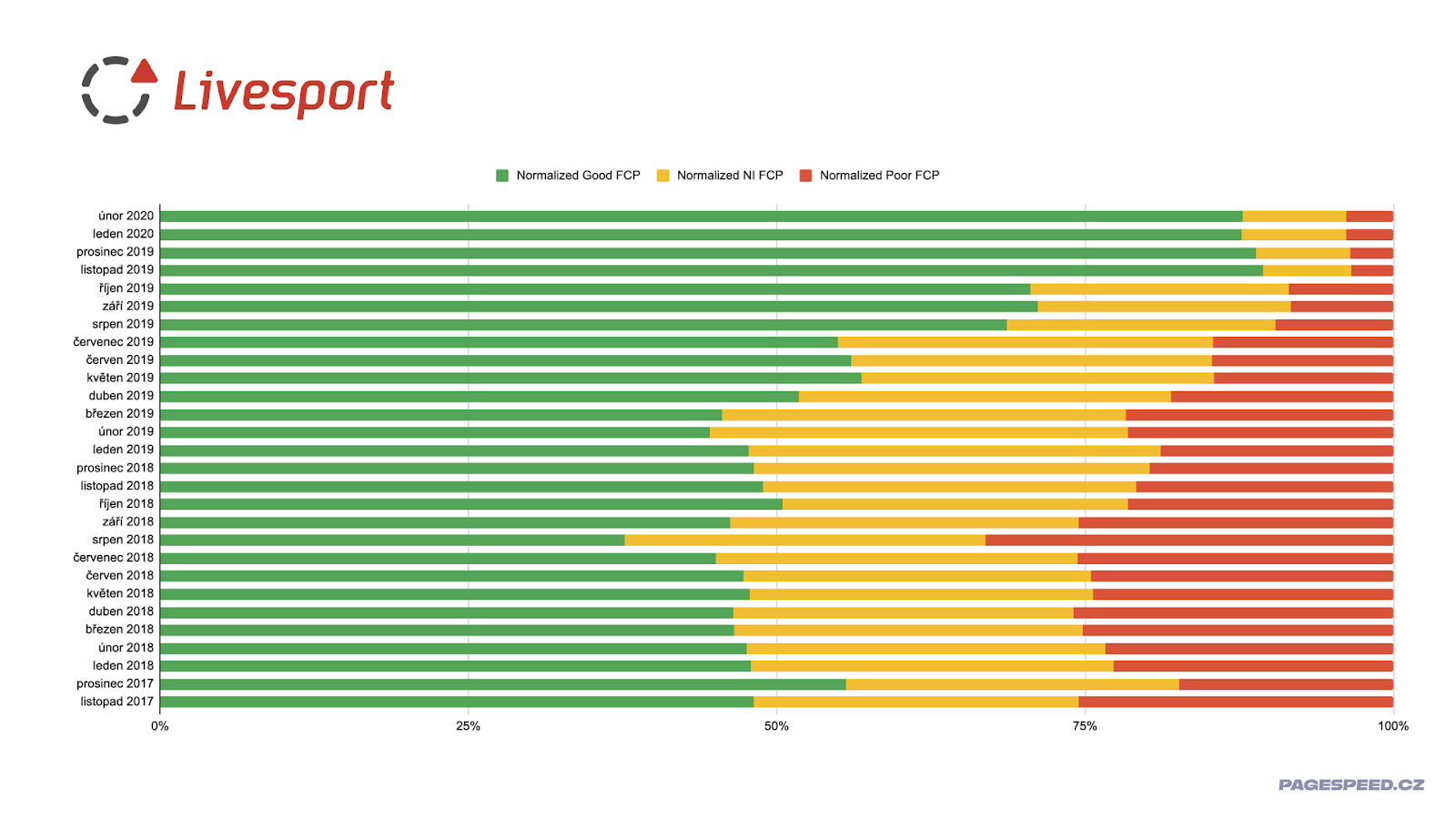 Development of the FCP metric on Livesport.cz for users up to February 2020.
Subsequent improvements to Speed Score in Google Ads were even more encouraging:
| August 2018 | January 2019 | |
|---|---|---|
| Europe | 4–7 | 9–10 |
| Japan | 1–2 | 10 |
| Africa | 1–2 | 6–7 |
| Australia | 1 | 7–9 |
| Brazil | 1–2 | 7 |
Impact on Search Rankings
Before Google rolls out the Page Experience signal, opinions on the direct impact of site speed on SEO will remain debated.
Speed is hard to isolate from other signals, so studies linking speed to rankings require comparing nearly identical sites. If we find such cases, we’ll share them.
Want our take? From Google’s communications, speed is clearly treated as an important signal. So we wouldn’t recommend sitting well behind your competition.
If we focus purely on SEO (and set aside psychological and business reasons for speed), the consensus is simple: it’s beneficial to run a fast server.
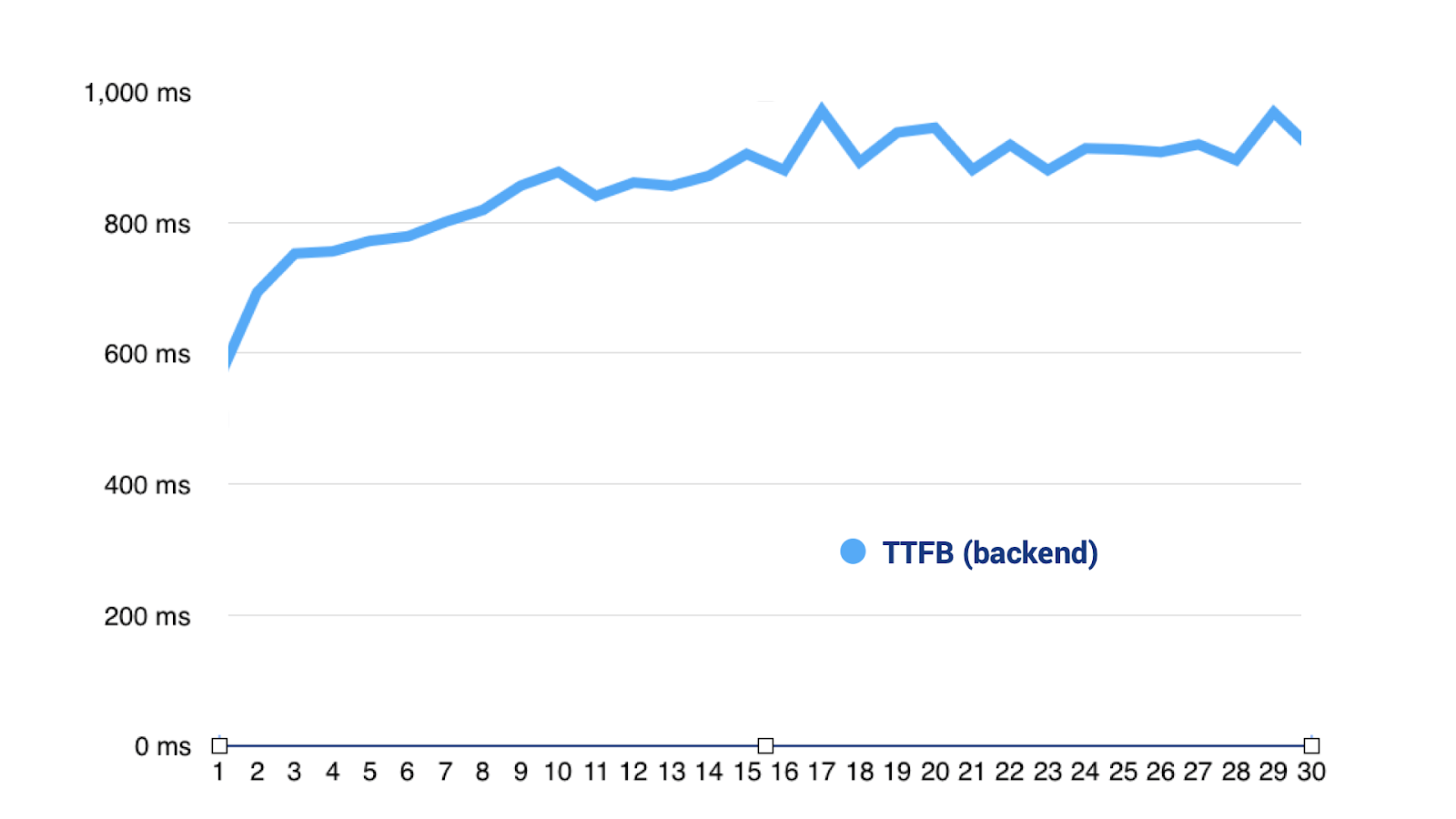 Correlation of Time To First Byte (TTFB) with Google rankings. - Source
Metrika TTFB, the simple measure of server and infrastructure speed, matters not only for overall site speed but probably for rankings and crawl budget as well.
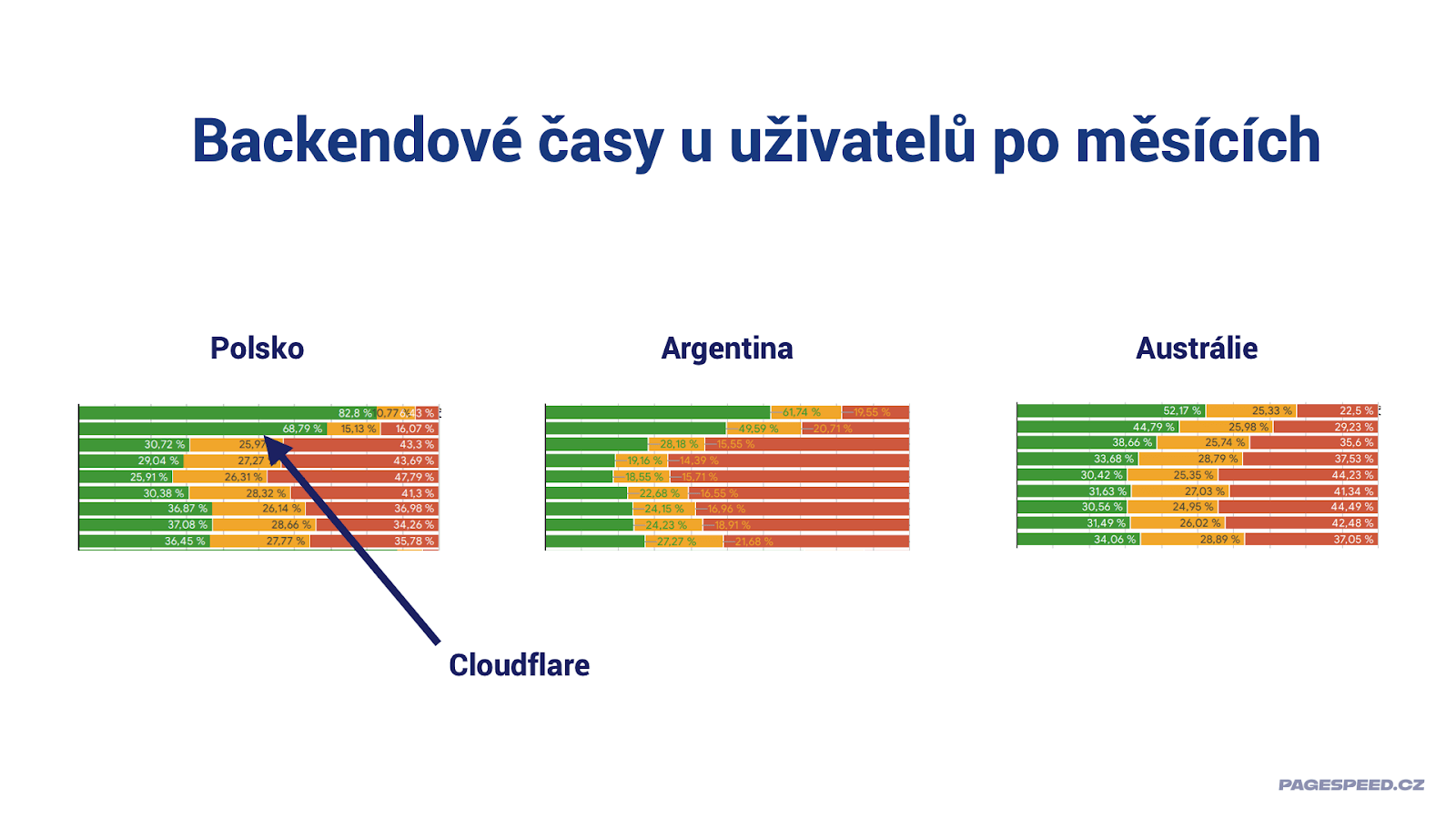 Our recommendation to focus on the backend for this global client dramatically improved metrics.
Server speed, and client-side code, also affect another signal search engines evaluate—Dwell Time, the time between clicking a result and returning to the search results.
Backend Optimization is therefore a crucial discipline.
How to Start Tackling Website Speed?
There are many places to start, but the process is always the same. The most important step is to determine your current standing, monitor progress over time and in different contexts, and identify the right opportunities to improve:
-
Measure speed, ideally alongside your direct competitors, with our Website Speed Tester.
-
Track speed regularly using Monitoring.
-
The tester measures the speeds of tested sites daily—save the URLs of your tests or sign up, and we’ll send you a monthly status report.
If you see gaps in speed, order a Website Speed Audit tailored to your project. Or simply reach out: info@pagespeed.cz.
Data Over Promises
At Srovname.cz, mobile conversions rose by 25%. Read how we did it and which concrete changes led to it in our case study.